
I got a cheap hair transplant in Turkiye, the recovery was agony, and I'd do it again in a heartbeat
Ten months after travelling to Istanbul for a bargain surgery, our writer checked back in on the highs and lows of regaining the hairline of his youth.
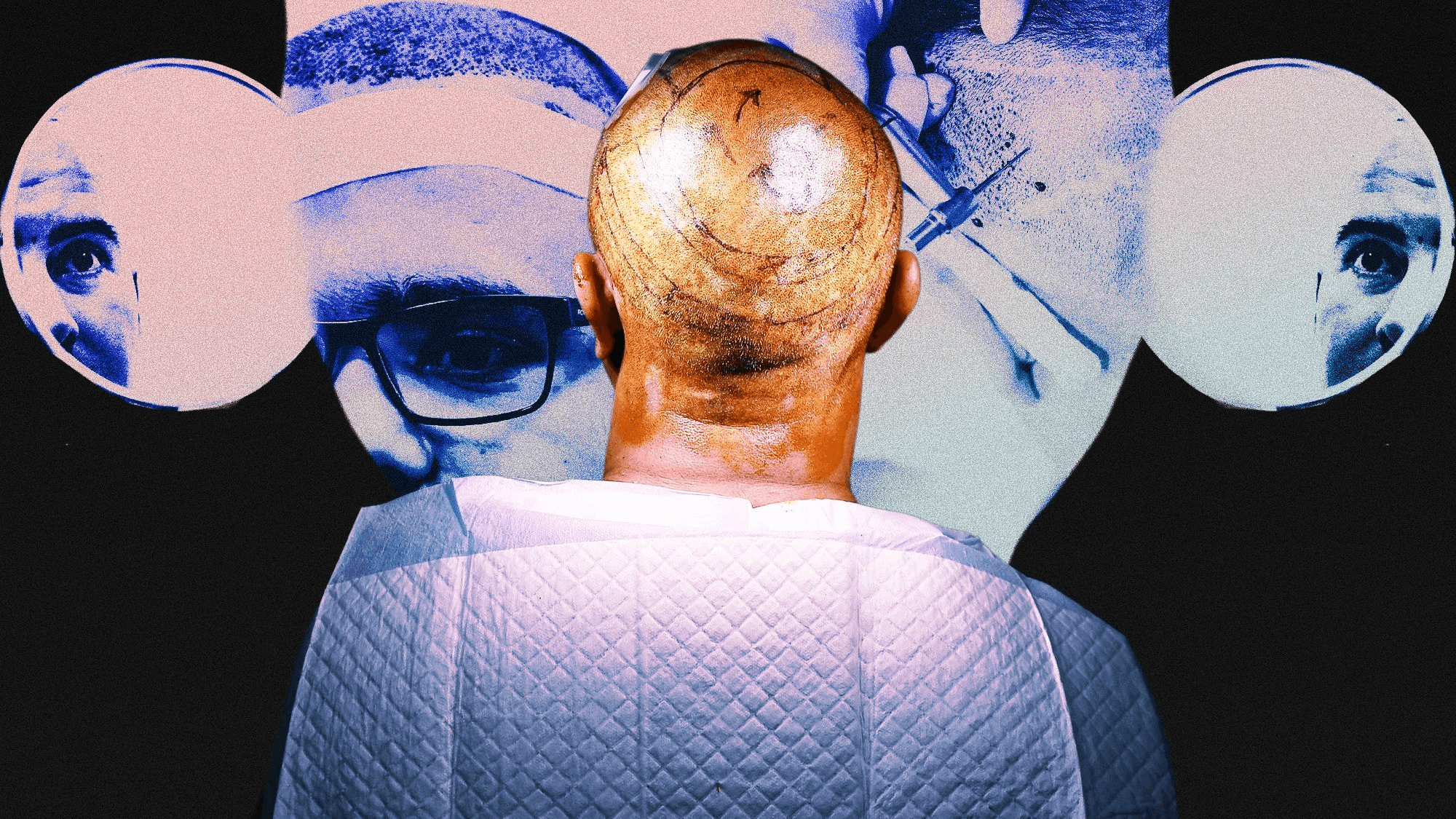
Would you spend a year in hell for a shot at heaven? This is the gamble of a hair transplant.
The procedure takes six to eight hours. In that time, it’s possible for bald guys to completely replace the hair that Father Time has taken away. Seriously: if all goes well, the results look extremely convincing, and they generally last for life. That’s why celebrities like LeBron James, David Beckham, and Elon Musk are all rumoured to be Team Hair Transplant.
It’s also wildly expensive—the surgery can cost tens of thousands of pounds in the UK or US. But in Istanbul, the emerging hair-transplant capital of the world, you can get it for a fraction of the price. So in March 2022, as I chronicled under this pseudonym for GQ, I flew to Turkiye and let a vaguely mysterious doctor cut 4,250 channels into my head.
The final indignity begins immediately: you can’t wear a hat, you can’t pull T-shirts over your head, and you’re not allowed to sleep on anything you care about staining. Because of earlier skin-cancer surgeries, my dermatologist already warned me about sun exposure, so I spent the first month skulking around like history’s unsexiest vampire.
In the early days your head is raw and it can still bleed. I got home and tried not to ruin my sofa. I ruined shirts anyway. For two weeks I could barely sleep; I felt groggy and cranky and my work suffered.
Not exercising was annoying (too risky for the new hair), so was not drinking (a restriction I still don’t totally understand), but showers were the true nightmare. You’re forbidden from putting your head directly under the nozzle—the pressure could damage the follicles—so you gently pour cups of cold water across your scalp, then dab them with your fingertips. The new hair looked and felt like grains of rice.
By month two the new follicles had supposedly locked into place. I could finally sleep normally, take regular showers, and even wear a hat when I needed to be undercover on Zoom.
Every morning I inspected my hair in the mirror, and every morning it looked worse. Welcome to the “Ugly Duckling” phase, where new grafts shed before they return. Once a month I checked in with Hair of Istanbul, WhatsApping them photos and begging for reassurance.
My first haircut came in month three. My barber, a jovial 80-something who fought in Vietnam, knew about the surgery. He inspected it from all angles and said, “It looks like doo-doo.”
Then I had to bring that Doo-Doo Hair to a family wedding—no hat, no cover, just a shiny scalp in a suit. Aunts and uncles were too kind to ask what had happened, and I was too cowardly to tell them. In the photos I look sad, bald, and defeated. As a buddy texted later, “You look like a disgraced politician.”
I knew that theoretically all of this was normal, but I also knew that some transplants fail. I had cheaped out by going to Turkiye; maybe this was what I deserved?
One morning, during my gloomy ritual of inspecting my hair in the mirror, I saw what might be a tiny new strand. Could it be? I didn’t dare hope. The next day there were several. They were no bigger than specks of pepper, but it was new hair, baby. I nearly wept with relief.
By month five, the entire transplant area had filled in with thin but undeniable coverage. By month six it thickened. For the first time since university I had real options again: let it grow long, swoop it, maybe even try hair cream that wasn’t designed to hide bald spots.
By month seven there was no ambiguity. The hair looked better than it had in decades. I looked younger. My barber whistled like a proud grandfather and rubbed his hands through my head, grinning. “It just feels so good,” he said.
On a first date, a woman told me I didn’t look anywhere near 46. Then she added, “You’ve still got your hair.” Lucky, I guess. Good genes.
Around month nine, studying my hairline with satisfaction, I noticed something less pleasant: I had gained weight. My face looked puffy. I stepped on the scale and realized I’d put on 10 pounds since the operation. The transplant fixed my hair anxiety, but now I had body anxiety. Apparently the quest for perfection never ends.
Both anxieties are foolish, of course. Research on happiness shows that when we buy something new we get a jolt of pleasure, but it fades and we revert to baseline. Then we crave more stuff. A transplant shouldn’t be a therapy session—it’s just a way to fix a specific insecurity—and by that metric mine was a roaring success.
On a backpacking trip in South America, I met a group of 20-somethings who assumed I was their age. When I said I was 46, they gasped and shouted that I must share whatever witchcraft clinic I visited. For the first time since my twenties, I forgot to check in with Hair of Istanbul. That’s how chill I felt.
Would I do it again? Absolutely. (That’s not to say you should—do your research, understand the risks, and know what you’re getting into.) I’ve done many dumb things in my life. This was not one of them. I predict hair transplants will only get more mainstream as prices fall. The results are too good to ignore.
At a recent party I saw a friend who knew about Istanbul but hadn’t seen me since the Ugly Duckling phase. “Hair looks great!” she whispered, not wanting to blow my cover. I thanked her, admitted I was happy, and she nodded approvingly. Then she said, “You know, you could get some Botox.”